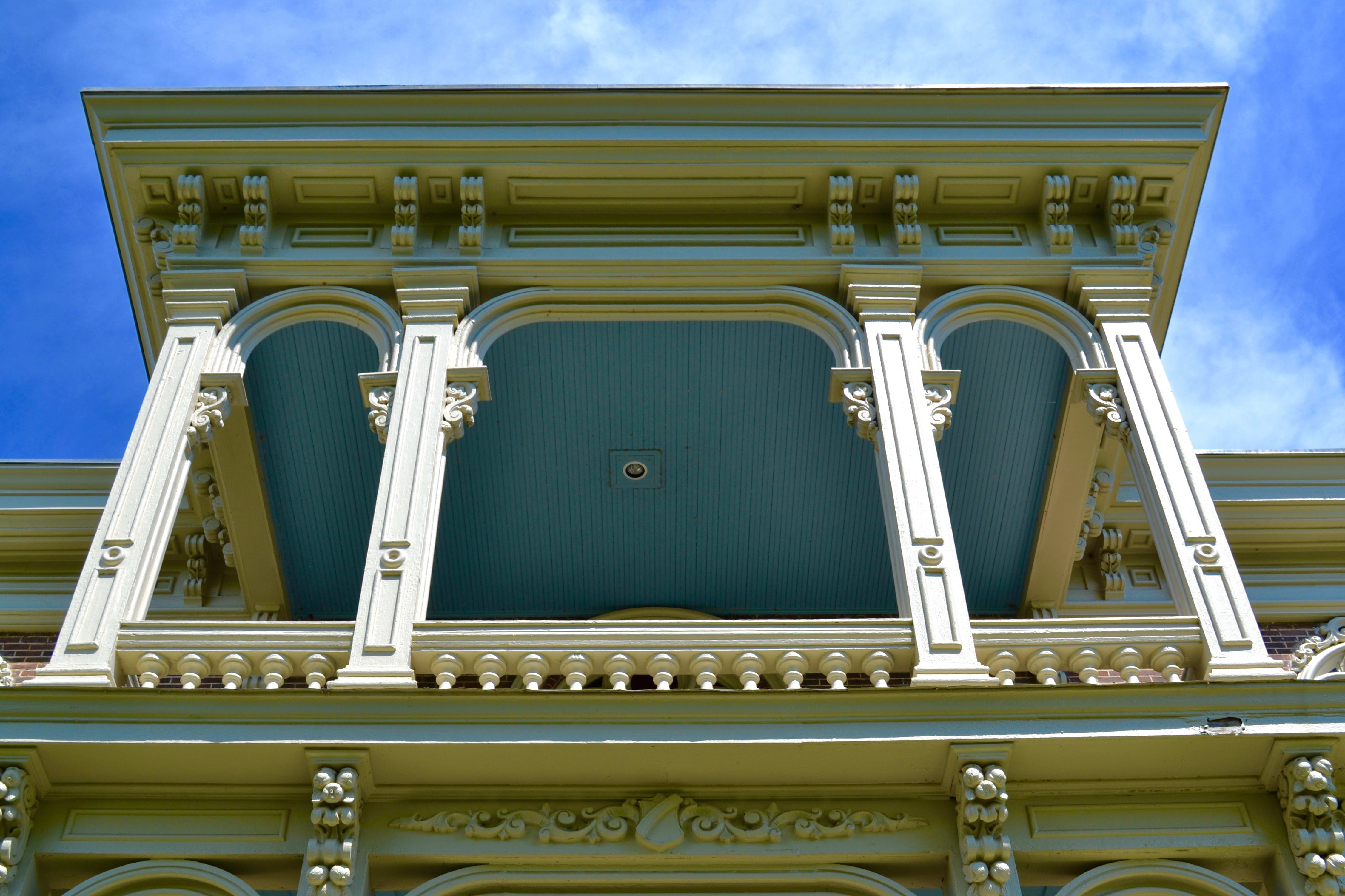

Ever wondered who oversees the nominations of historic Tennessee properties to the National Register of Historic Places? That responsibility belongs to the Tennessee Historical Commission, which happens to be housed in a spectacular historic property known as Clover Bottom Mansion, situated outside of Nashville in the Donelson area. A fine example of Italianate architecture—a 19th century construction style based on the ornate buildings of the Italian Renaissance in the 1600s—Clover Bottom dates to 1858, when Dr. James Hoggatt constructed the house on land inherited from his father, a Revolutionary War veteran. Officially purchased by the State of Tennessee in 1948, Clover Bottom has gone through a number of uses through the years (inclusive of housing the nearby Tennessee School for the Blind faculty) and has been on the National Register of Historic Places since 1975.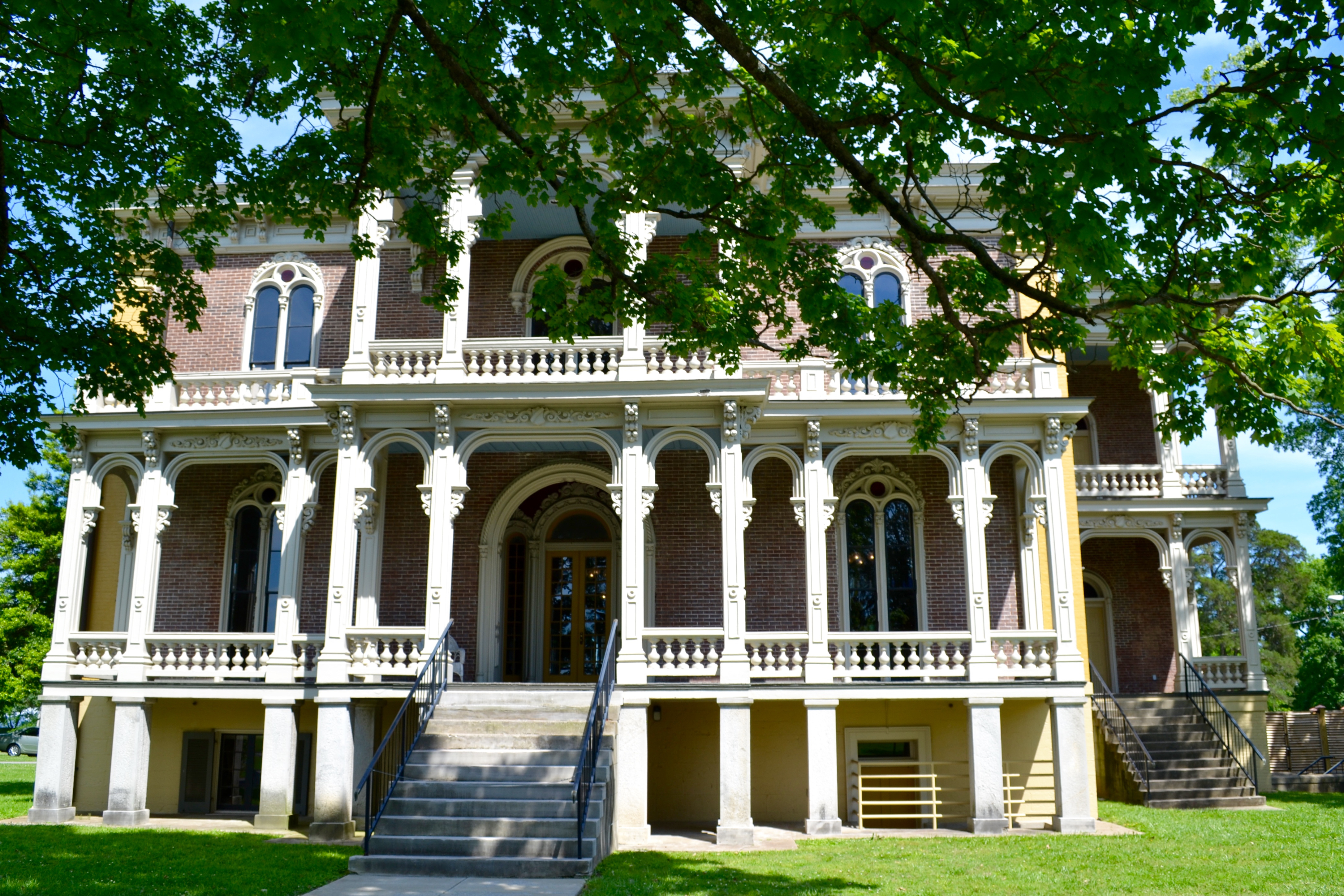 Though the interior is no longer open to the public, people are welcome to walk the trail and grounds surrounding Clover Bottom, a plantation that once spanned 1500 acres. You’ll find the three-story house at the end of a long drive, with parking just behind the building. Immediately, you’ll notice multiple dramatic wood cornices that take center stage on all the porches, as prominent bracketed cornices are a signature component of Italianate architecture.
 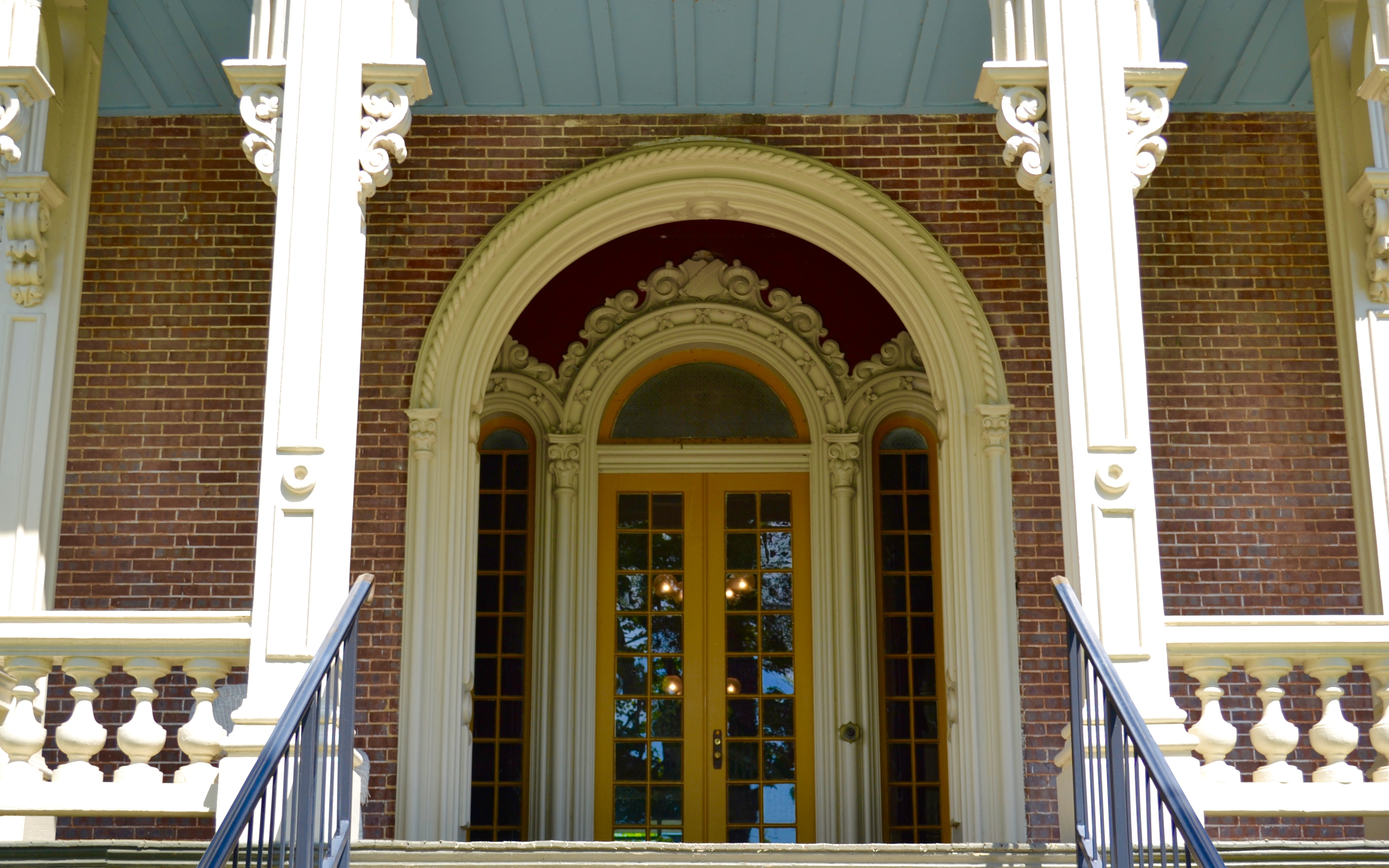 Arched windows are another common feature in Italianate homes and can be seen beginning with the front door sidelights. The corded arch trim detail above the door is quite stunning in person, and there appear to be flowers carved into the trim just above the arched transom, as well as a crest in the middle of the trim above the flowers. The level of craftsmanship this carved woodwork required doesn’t go unnoticed.
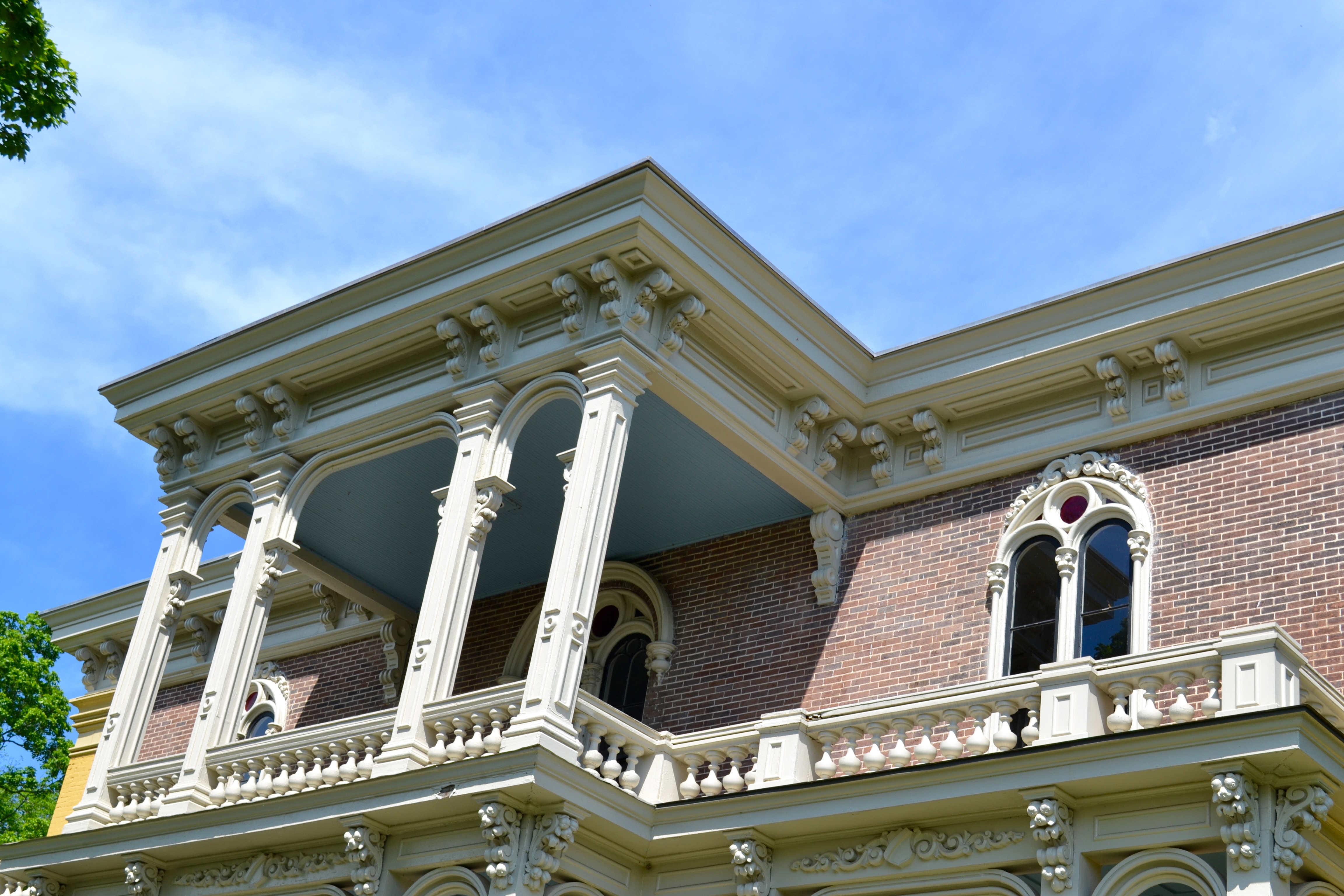 If you look closely, you’ll spot eggplant-colored, circular stained glass windows above each pair of arched windows.
 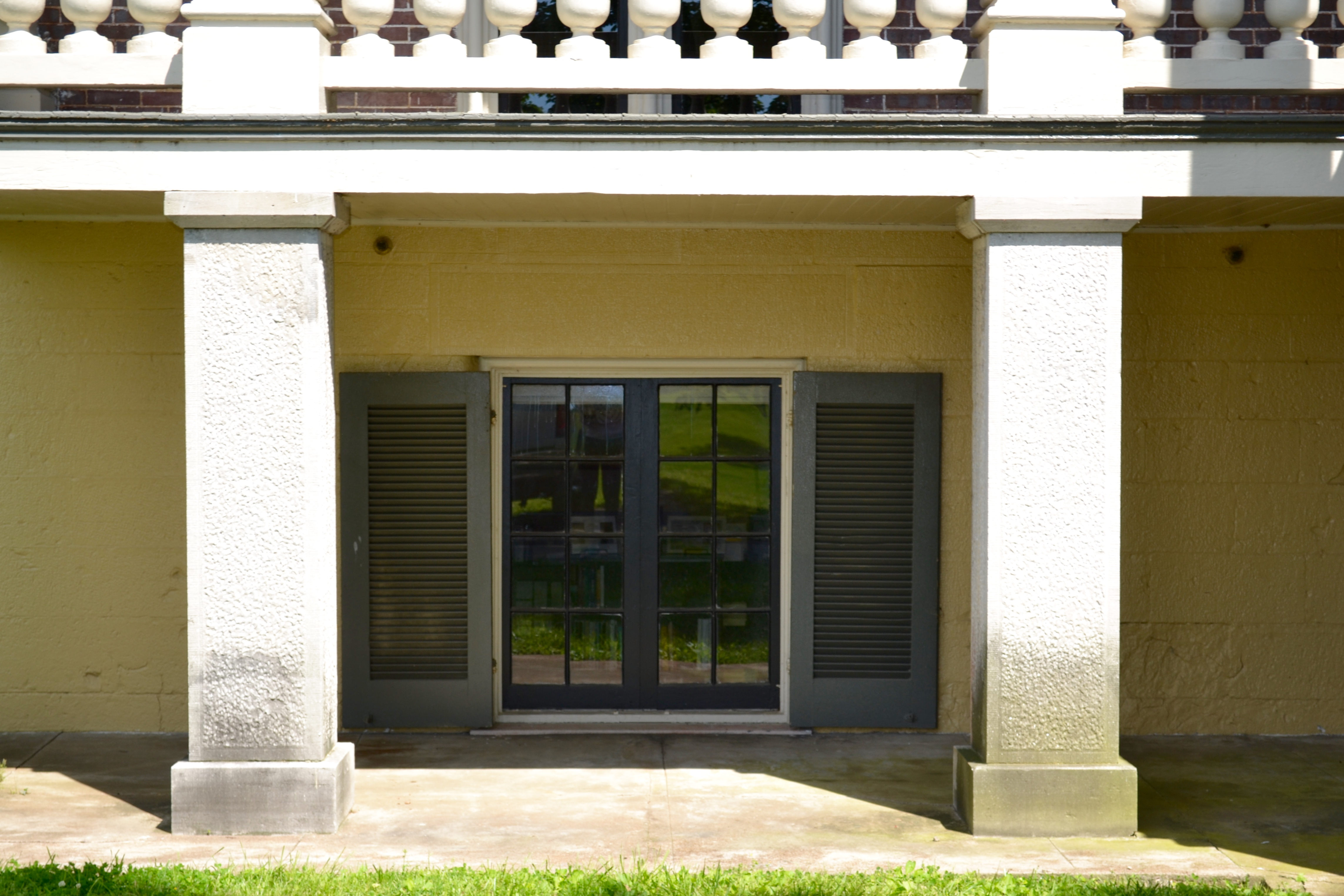 Wide limestone columns flank each of the basemen windows on the front.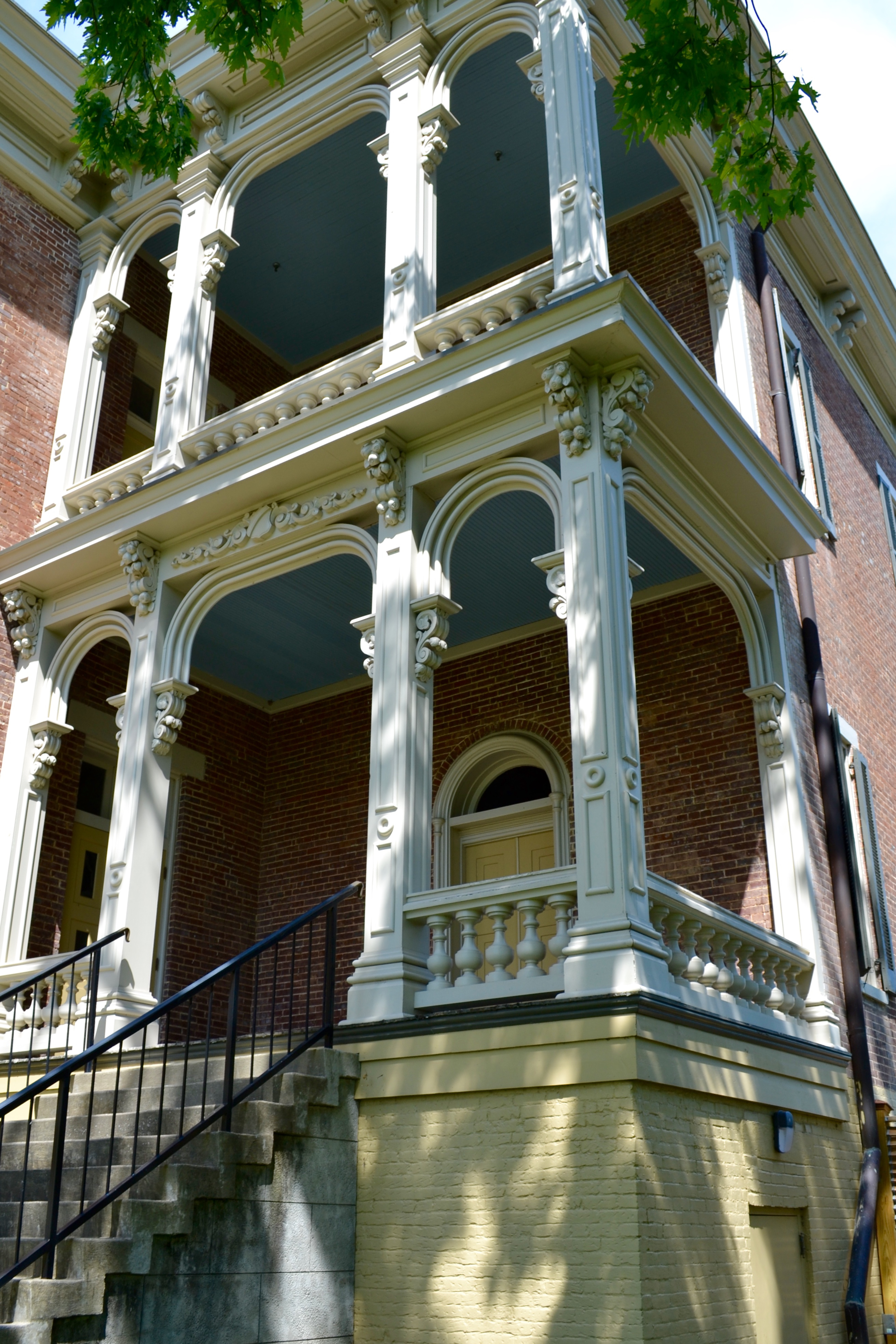
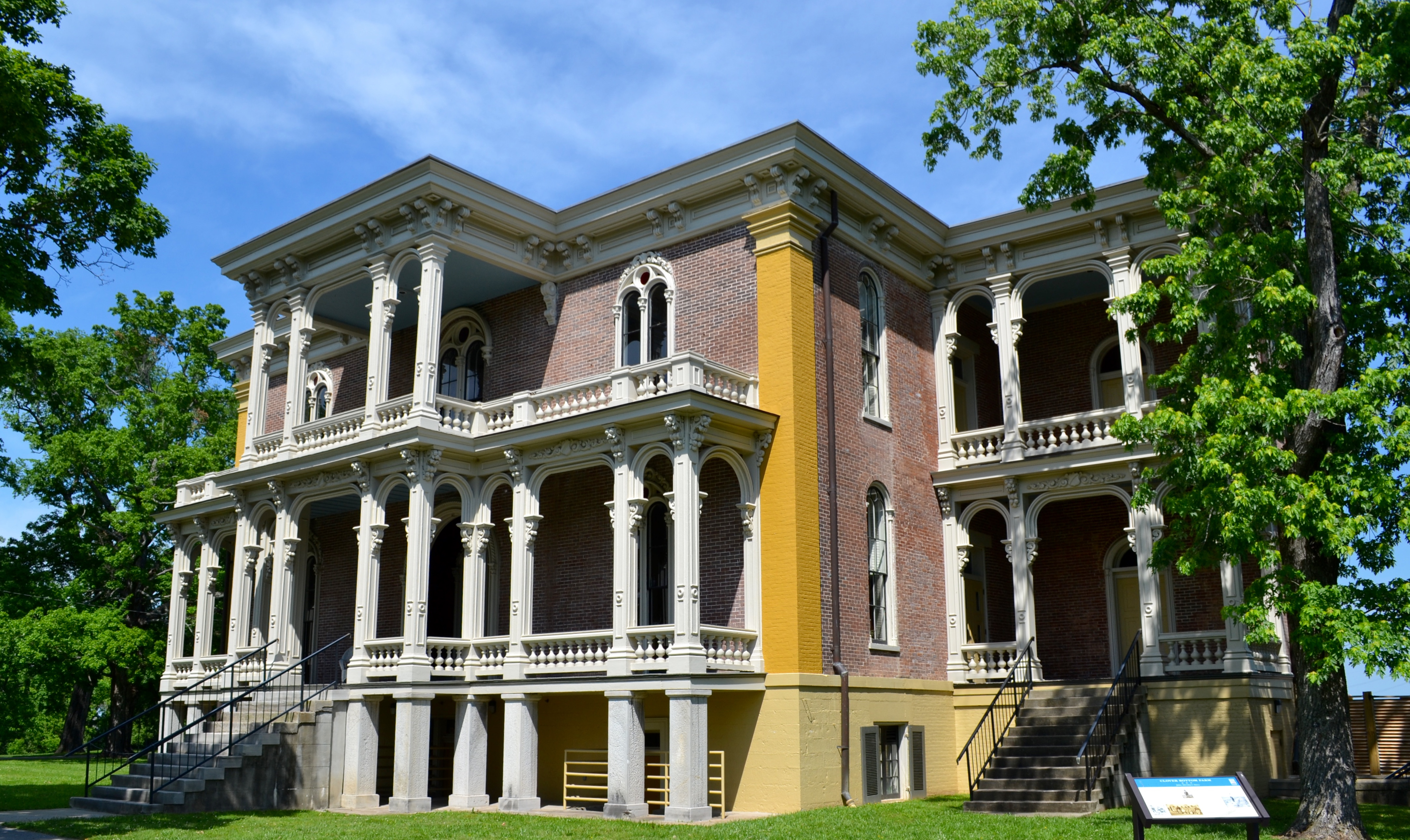 The far right side of the house includes another double-storied porch and its own set of stairs.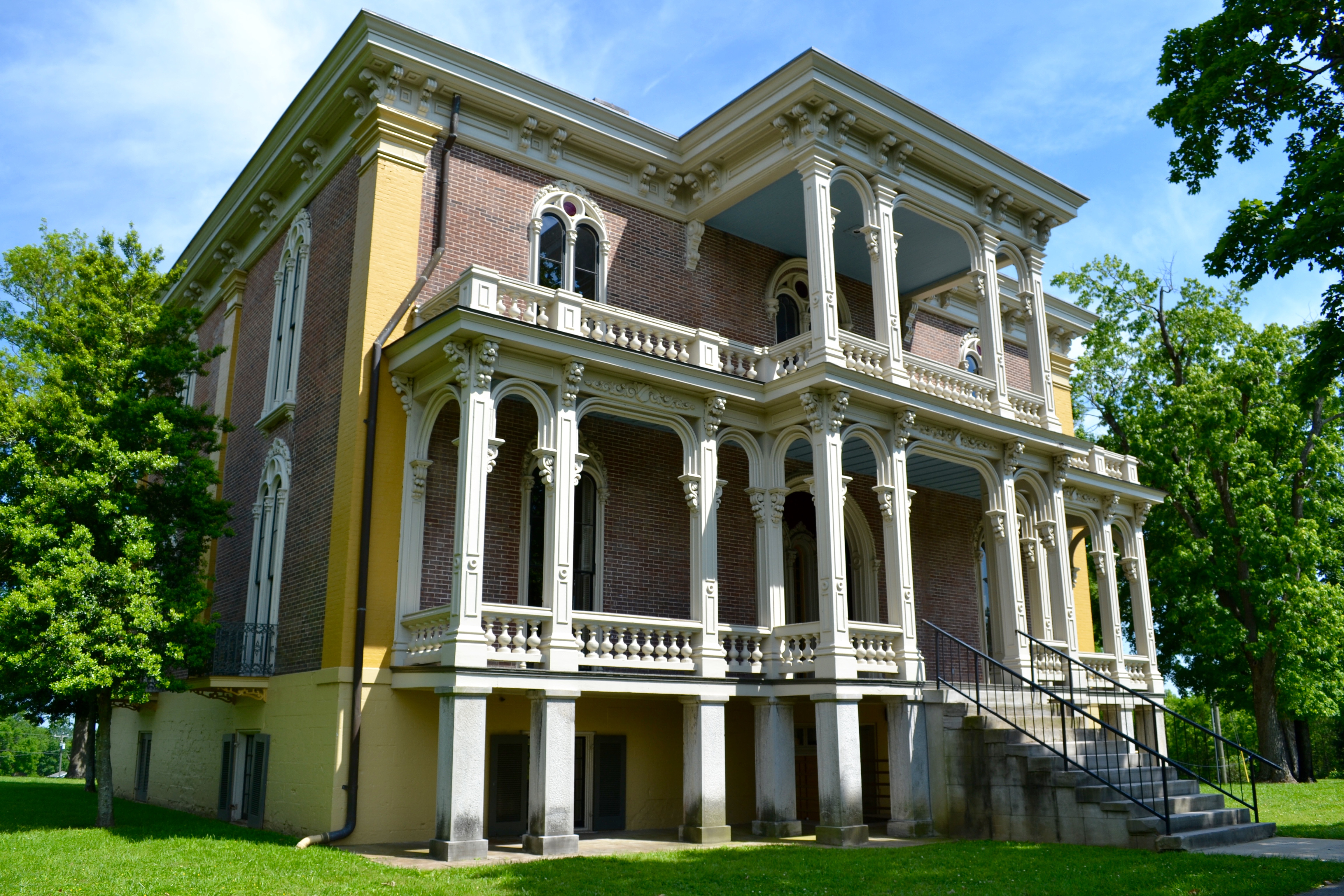
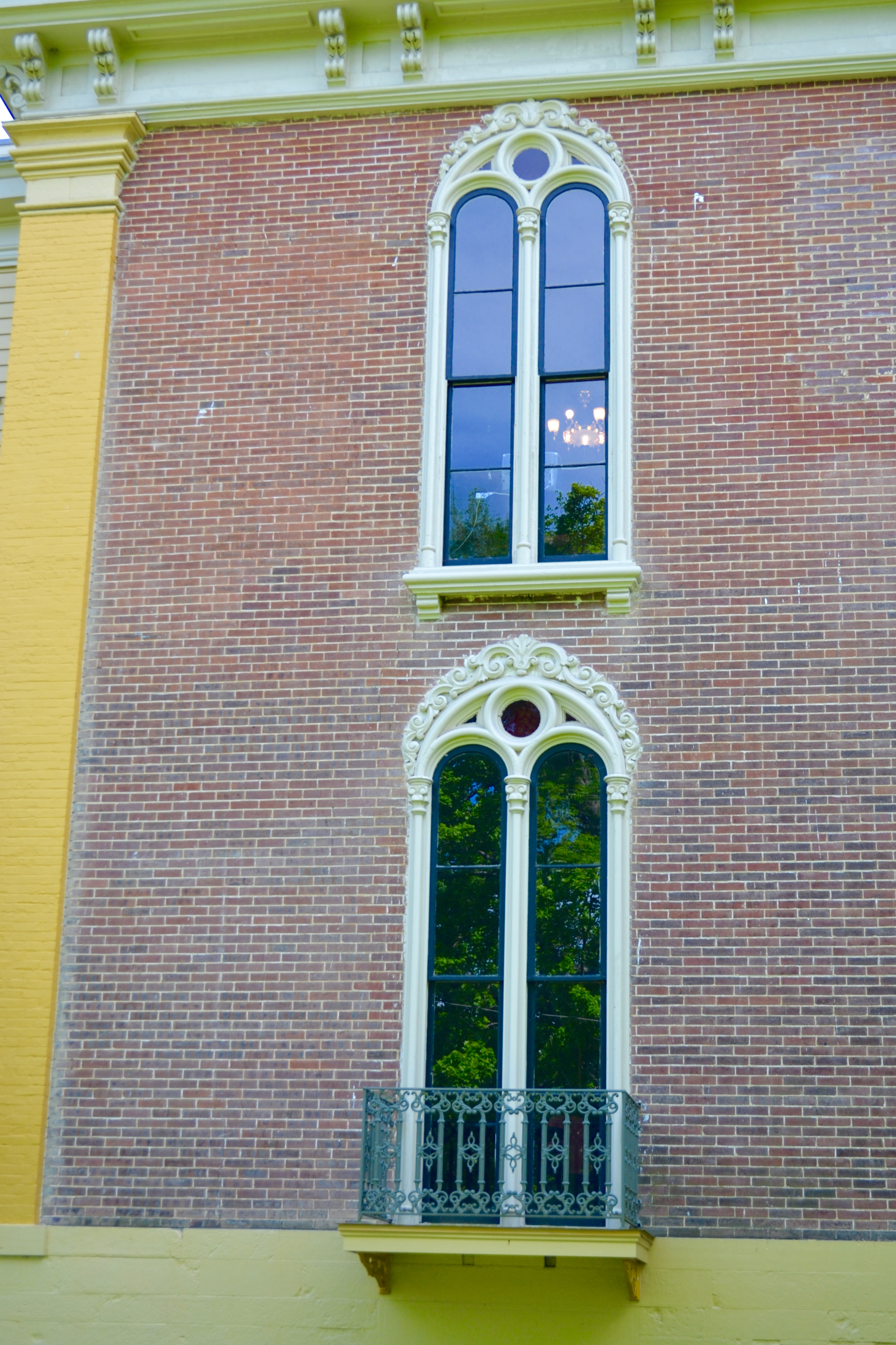 The left side of the house features four more sets of double-arched windows, with the lower sets boasting wrought iron Juliet balconies.
 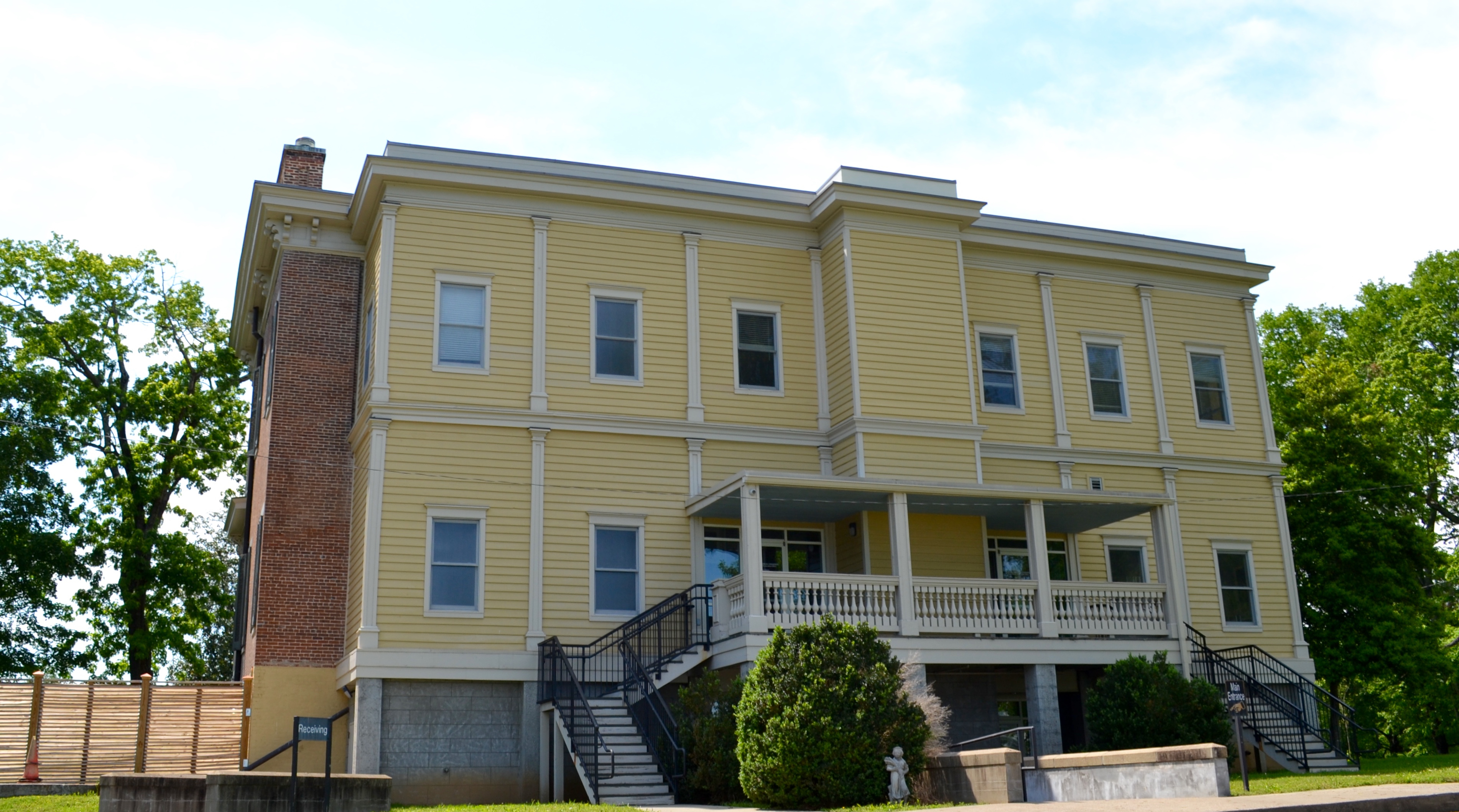 More than likely, the back wood portion of the house was added on later. You now access the Tennessee Historical Commission office by walking down to the basement via the staircase in the middle (at sidewalk level).
 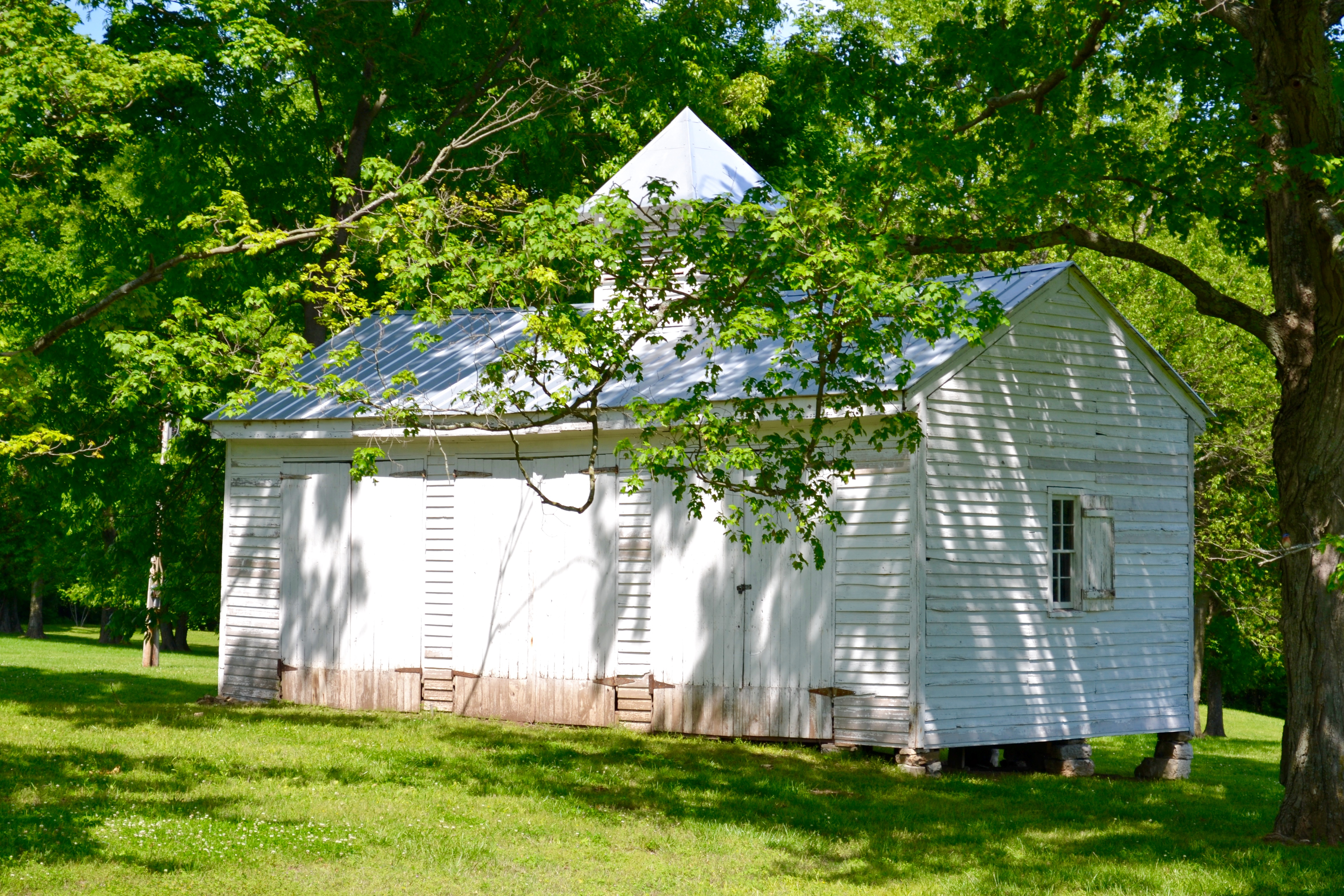 Being that horses offered the main mode of transportation when Clover Bottom was built, there was great use for the Carriage House that stands to the back left of the property. Hand-forged hinges are still present on the door corners, and the cupola at top was replicated in 2015 from a 19th century photo of the property.
 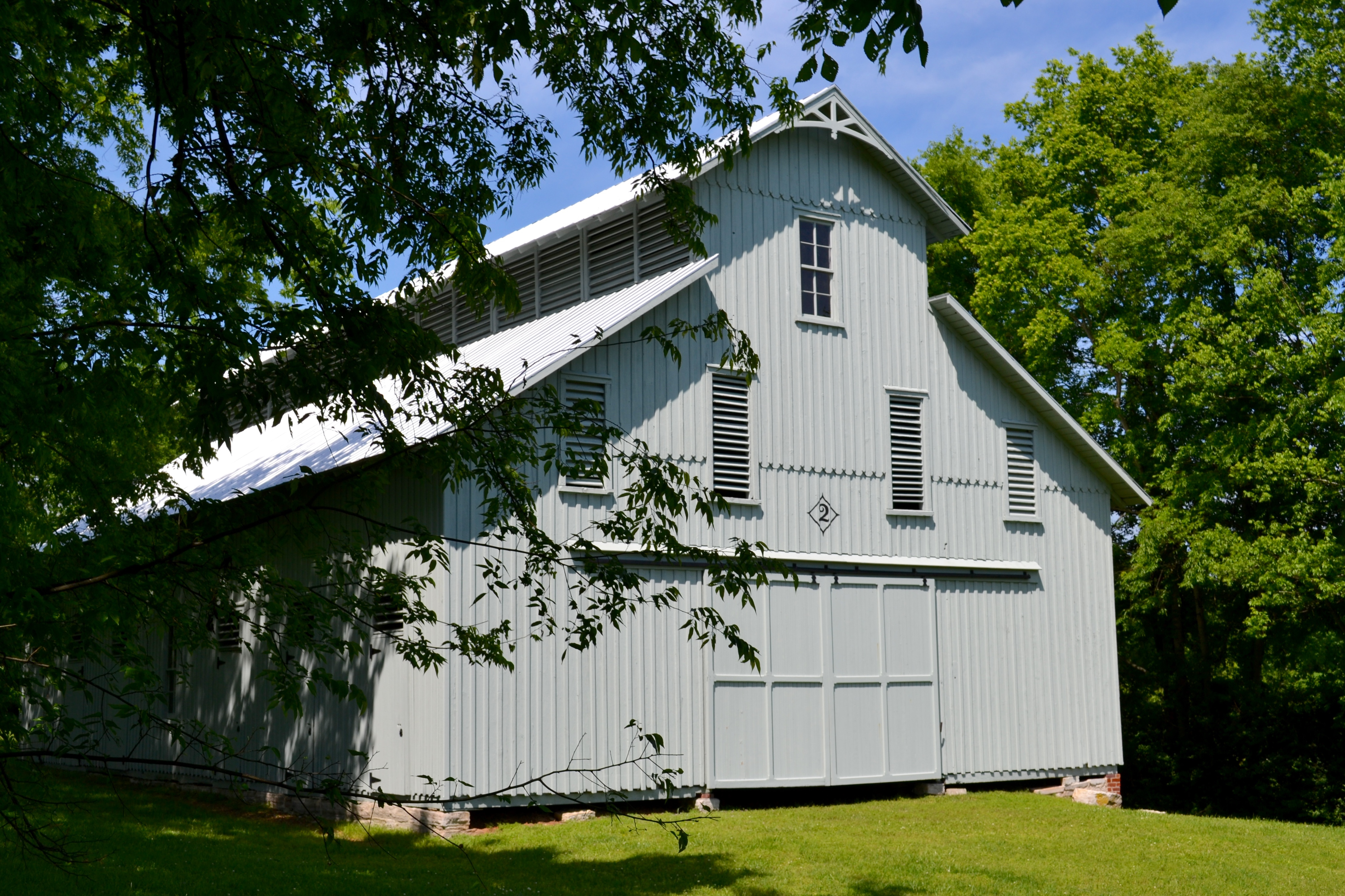 A beautifully restored barn, which dates to 1898, sits behind the Carriage House, and according to a plaque in front of it, this crib barn (or central aisle barn) is one of the last surviving late 19th-century horse barns in Davidson County. By the 20th century, some of the horse stalls were converted to cow milking stalls.
 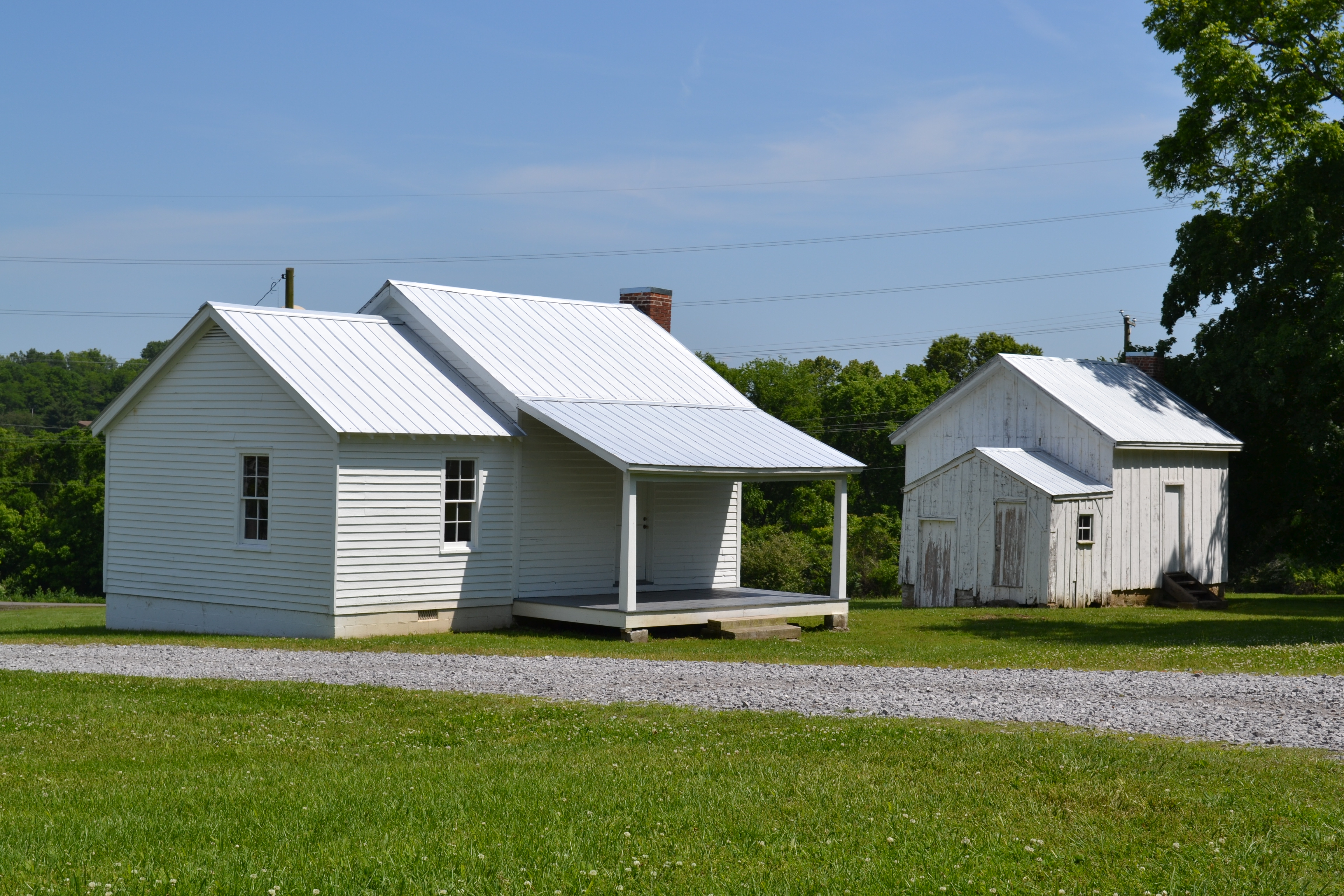 These are the only two remaining slave cabins left on the grounds, and they date to 1858. The right cabin was restored in 2015 to its original conception with board and batten siding. The left cabin reflects updates and additions made throughout the 1900s and is thought to have received its current appearance by the 1940s. A 14-foot-deep cellar is underneath the right house and possibly once housed an ice pit. By the 1970s-80s, the building served as a Boy Scout troop hut.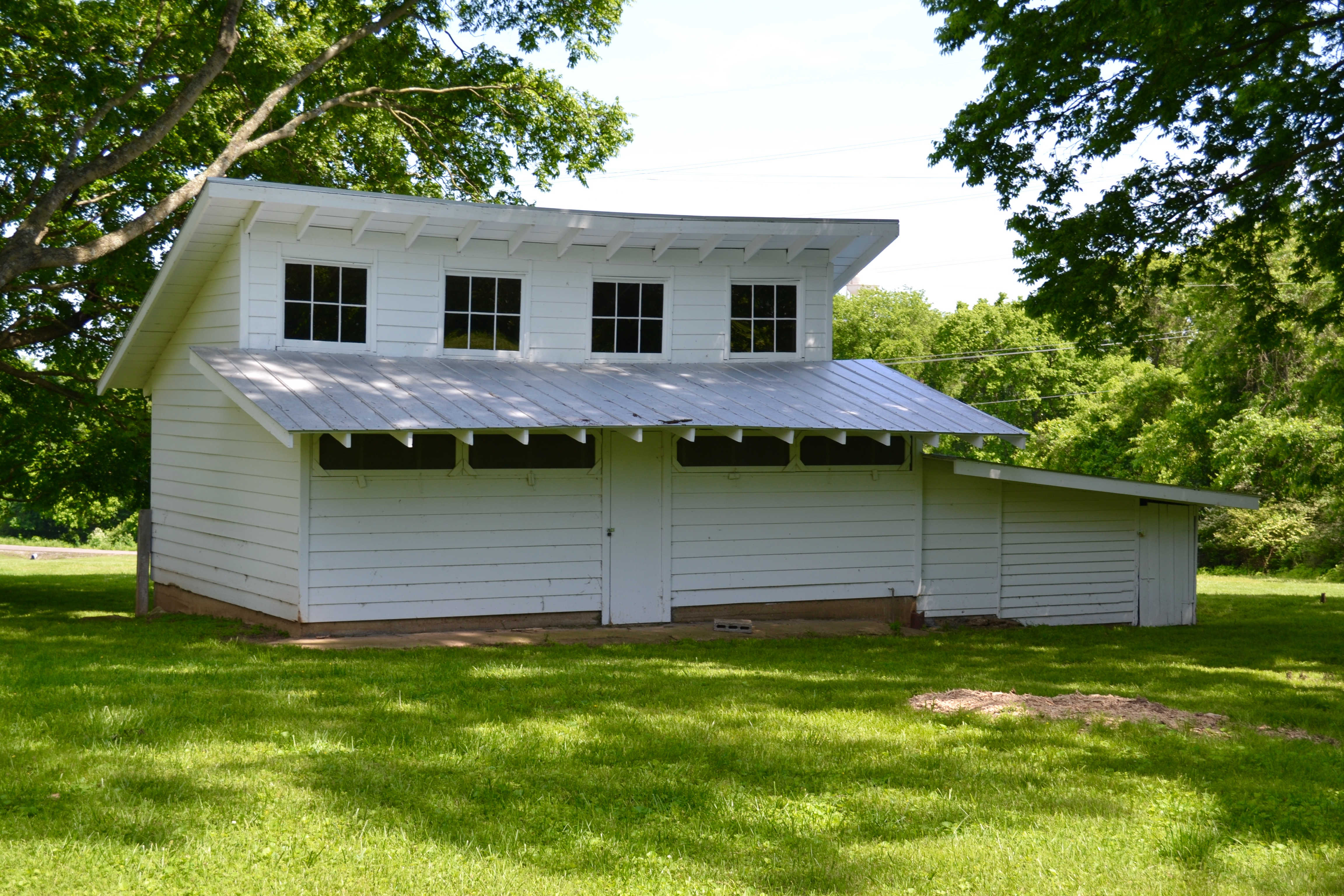
*All Images by House + Soul
Chicken coops might be trendy now, but chicken houses as big as this one were a necessity for a working farm like Clover Bottom. Historians estimate this one to be a circa 1920s chicken house that seems to be inspired by Sears Roebuck Chicken House Design C221. Apparently, the Chicken House was used into the 1980s, when Tennessee School for the Blind faculty lived at the house.
Though Italianate houses like Clover Bottom stand in sharp contrast to today’s more simplified exteriors, this type of architecture is one that can still be appreciated for its attention to bold detail and harkening to a bygone European era. And if you like this style, you can still find some new houses that embrace some Italianate features, especially arched windows. Feel free to reach out if there’s another architecture style you’re curious about and would like to see featured, and until then, we promise to be hard on the hunt for the next House + Soul® Historic House.
Your House + Soul® guru,
Realtor Leah
Stay savvy by signing up for our blog today!
*House + Soul® founder and CEO Leah Fitzpatrick proudly holds REALTOR® status and hangs her license with Keller Williams Realty in Franklin, Tennessee. A passionate communicator and editor for nearly nine years, thoroughness to detail and unrelenting research tactics are her fortes—both of which translate well when tracking down houses and writing contracts in the Nashville area’s booming real estate market. She’ll also happily engage in any conversation about winemaking or vineyards, hiking, travel, cocker spaniels, art and interior design. Leah welcomes you to reach out to grab coffee with her should you want to discuss any real estate needs.
